Christmas on a Budget: A Simple 6-Step Plan (With a Christmas Budget Planner)
Christmas spending creeps up on most of us. A few gifts here, extra groceries there, a last-minute present on December 23. Then January arrives with the bill. The fix isn't spending nothing. It's deciding in advance what you'll spend, then writing it down. Here's a simple plan you can do in one evening.
Step 1: Pick one total number
Before you think about gifts, decide on one number for the whole season. It covers gifts, food, decorations, cards, travel and going out. Base it on what you can pay without borrowing: money you've already saved, plus what you can set aside from your November and December pay.
If last year left you with a credit card bill, set this year's number lower than last year's spending, not equal to it.
Step 2: Split it into categories
A typical split looks like this:
- Gifts: 50–60%
- Food and drink: 20–25%
- Decorations, cards and wrapping: 5–10%
- Travel and outings: 10–15%
Adjust it to suit your family. If you're hosting Christmas dinner, food gets a bigger share.
Step 3: Make a gift list with a number next to every name
List everyone you'll buy for, with a budget next to each name. Add up the column. If it's more than your gift budget, trim now, not in the shop. Ideas that help:
- Secret Santa for the adults in a big family: one good gift each instead of eight small ones.
- Experience or homemade gifts, like a family cookbook, a voucher for a day out, or baking.
- Set a family price limit and agree on it early.
Record what you actually spend as you buy each gift. Seeing the running total stops overspending more than willpower does.
Step 4: Plan the big meal
Write the menu first, then the shopping list, then check what's already in the pantry. Buy long-life items (drinks, baking supplies, frozen food) in early December when they're on offer, and leave fresh food for the last few days. A cooking countdown (what to make 2 days before, the day before and on the day) saves money on panic buys as well as stress.
Step 5: Do the cheap and free things on purpose
Some of the best parts of December cost almost nothing: a walk to see the lights, a cookie-baking afternoon, a family game night, an activity advent calendar for the kids. Put them on the calendar so the season feels full without filling the shopping cart.
Step 6: Start a Christmas fund for next year
In January, divide next year's Christmas budget by 11 and set that amount aside every month in a separate savings pot, often called a sinking fund. Next December, the money is already there.
Printables that make this easier
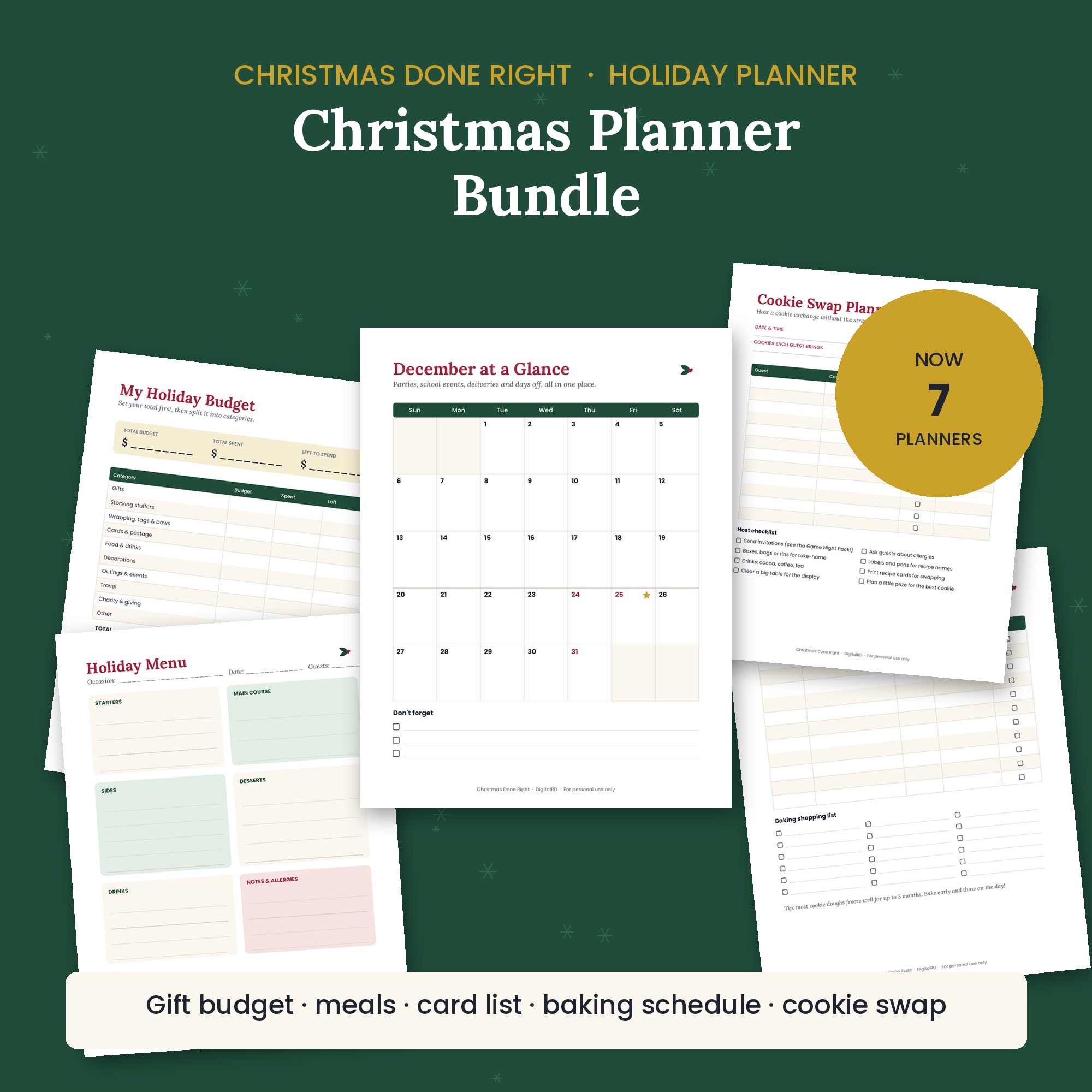
- Christmas Done Right ($16.99): a holiday gift budget planner, a holiday meal planner, planner extras (December calendar, Christmas card list, baking schedule, cookie swap planner, events planner), 18 gift tags, 4 holiday cards, a 24-day advent activity calendar and kids' coloring pages, so you can plan the whole season in one evening.
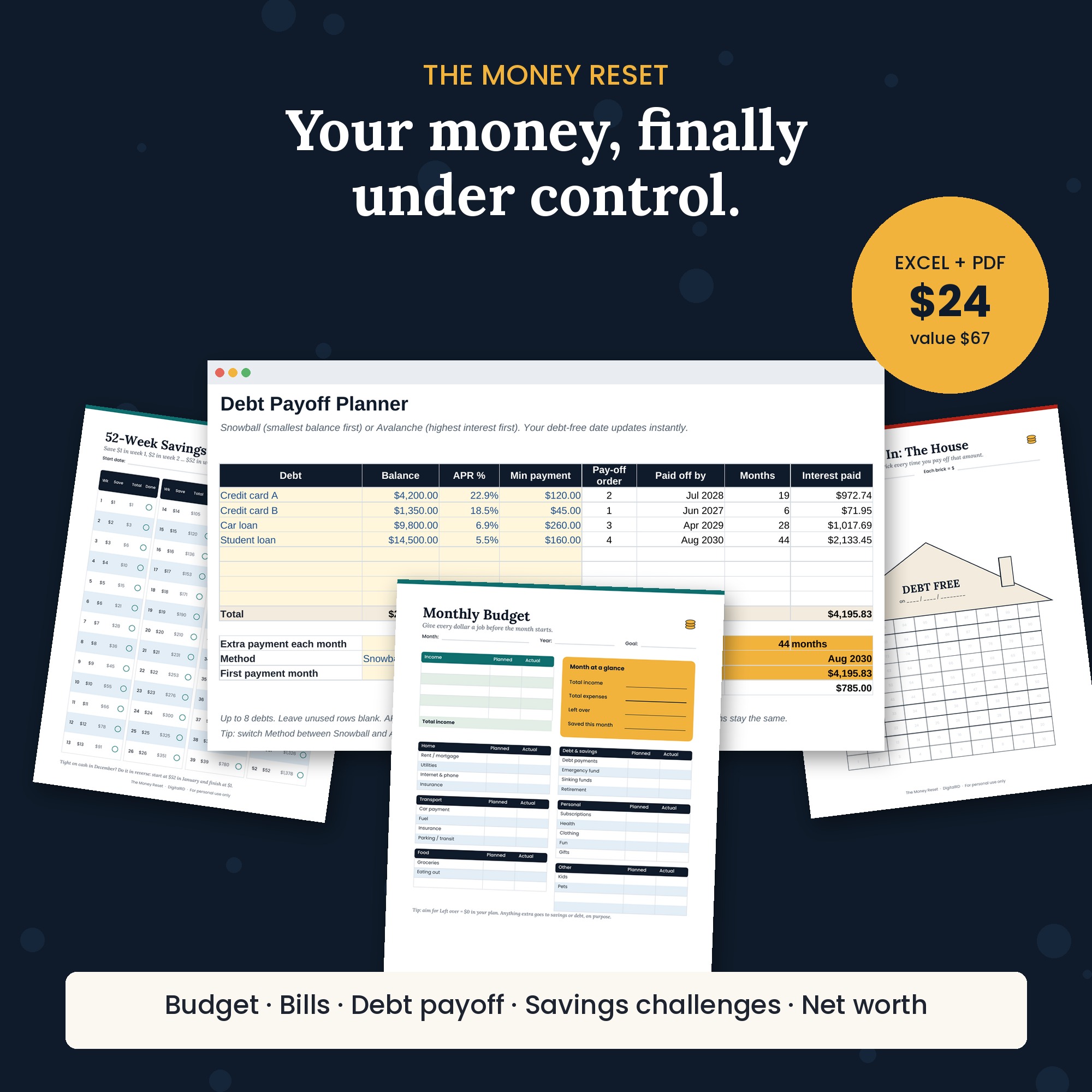
- The Money Reset ($24): a budget spreadsheet with sinking funds (including a Christmas fund), a bill tracker and a debt payoff planner, for a calmer January and a funded Christmas next year.